PowerShift 2026 summit
MAY 25 – 27TH 2026  |  TORONTO

POWERSHIFT 2026

A pan-Canadian summit reimagining sport, play & movement as a human right.

About

OVER 2.5 DAYS, WE BUILT A WORKING SPACE 

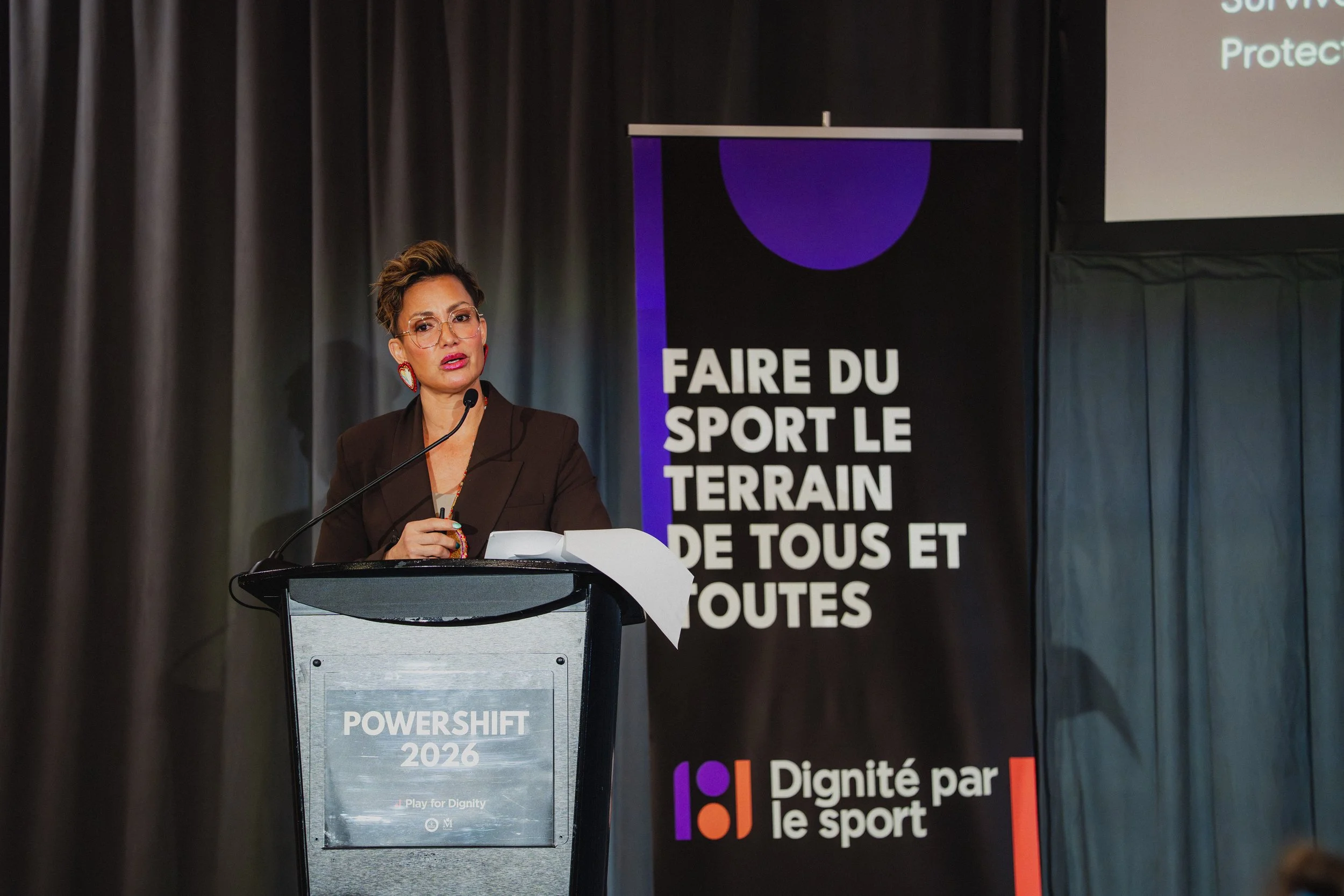
Over 2.5 days in downtown Toronto, we convened a pan-Canadian summit to reimagine sport, play, and movement as human rights — bringing together leaders from across sport, community, health, education, culture, and government. The summit was co-hosted by Shireen Ahmed, a multi-platform sports journalist and Adrian Harewood, a television and radio journalist. Arriving as Canada prepared to host the 2026 FIFA Men's World Cup and as the Future of Sport in Canada Commission charted new directions, PowerShift was built as an active, working space rather than a sit-back conference.

The summit opened on an evening grounded in joy, reconnecting everyone in the room with the love of sport that brought them there. Day One moved from diagnosis to possibility: an opening welcome video from Maggie Mac Neil OLY helped inspire attendees, followed by Nikki Dryden OLY who delivered a keynote that established what a human rights-based approach actually demands, before sessions named the gap between Canada's commitments and people's lived experience and looked abroad for proof that rights-based sport governance is not utopian. The afternoon turned to storytelling and community.

Day Two turned examined what organizational change requires, how the 2026 World Cup can leave a rights-respecting legacy, and what it would take for funding to become accountable to rights-holders. Throughout, every participant moved together through three facilitated workshop tracks — Policy, Practice, and Perception — that produced a shared framing, a collective agenda, and the first act of building a Canadian Bill of Rights for Sport and Play.

WATCH THE SUMMIT HIGHLIGHTS

PowerShift 2026 · Recap film

OVERVIEW OF PLENARIES & SESSIONS
Our Collective Why
Opening
Our Collective Why
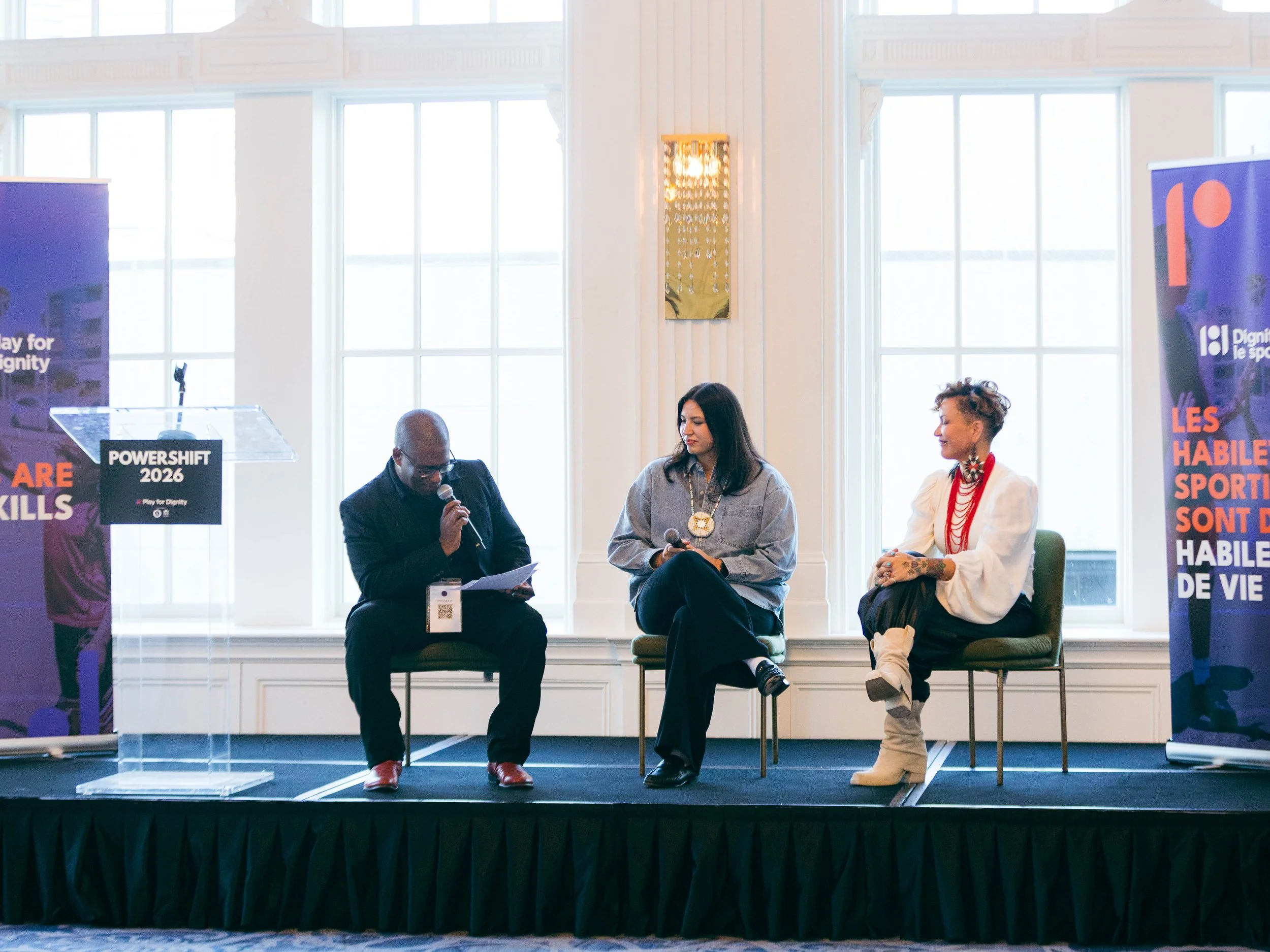
Sport at its best is one of the most human things we do. PowerShift began by asking what it would take for everyone to experience it that way. There was a territorial welcome, remarks from Play for Dignity, and an opening voice to anchor the whole summit in lived joy and the deeply personal relationship each person in the room has with sport. Speakers: Adrian Harewood, Kevin Sandy, Marco DI Buono, Chief Tréchelle Bunn, Waneek Horn-Miller, Ige Egal
Keynote: Nikki Dryden
Keynote
Nikki Dryden OLY
Nikki Dryden OLY laid out the frame and the case for a human rights-based approach (HRBA) in sport. Before the summit could go anywhere, participants needed a shared understanding of what HRBA means in sport — and why this moment in Canada demanded a different kind of response.
Building a shared vocabulary
Companion Reflections
Building a shared vocabulary
Two brief companion reflections deepened the keynote's opening frame and built shared vocabulary. Bruce Miller (Manitoba Aboriginal Sport Circle) traced the "double helix" of western human rights and Indigenous land-based rights, showing what a truly grounded HRBA looks like in Canada. Bayan Kaid (Outdoor Play Canada) brought "play" into focus, sharing emerging international consensus on its definition and its roots in the UN Convention on the Rights of the Child.
The Gap Between Promise and Reality
Plenary 1
The Gap Between Promise and Reality
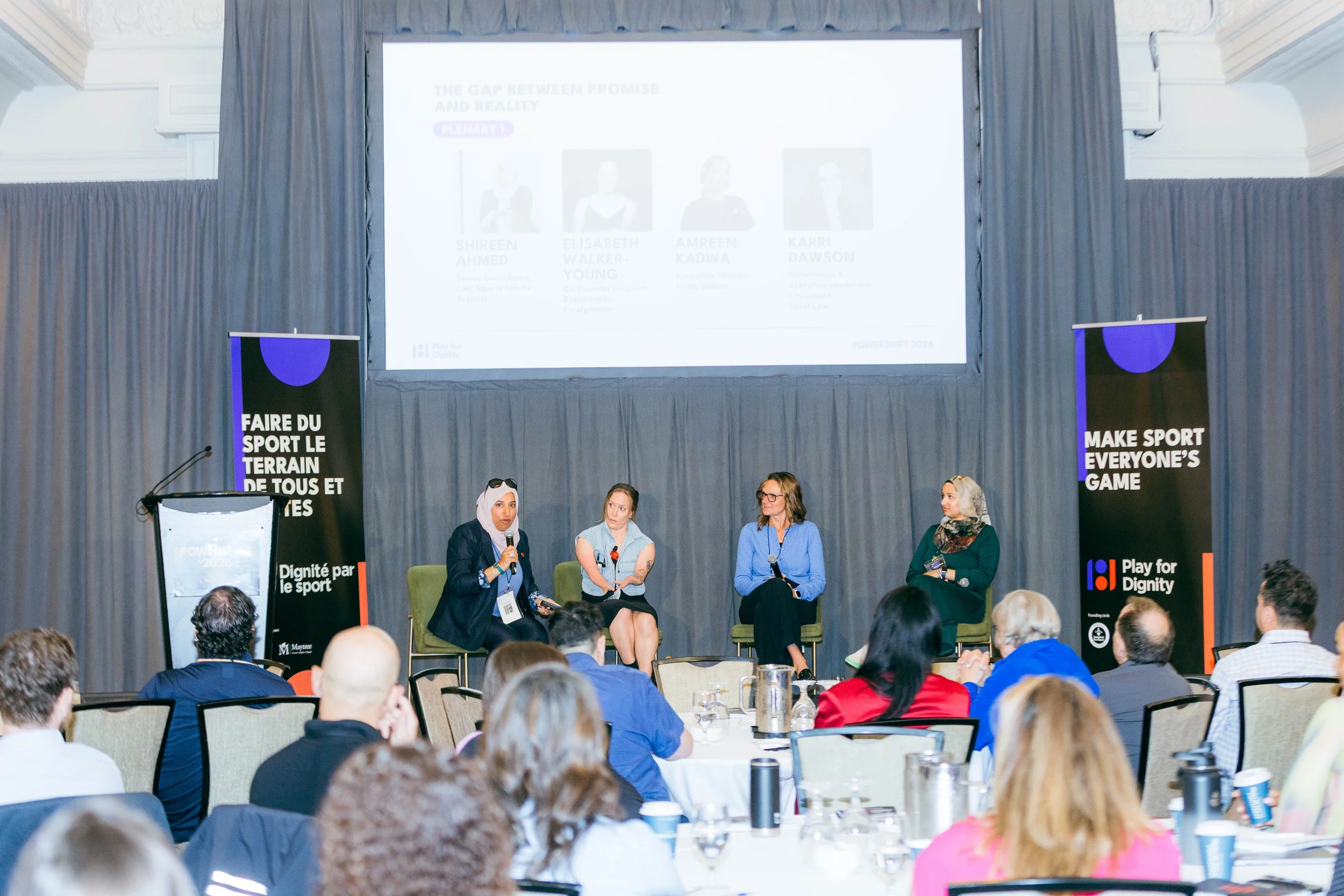
Canada has made many commitments — under UNDRIP, the UNCRC, and the TRC Calls to Action — yet the experiences of many rights-holders within the sport system fall dramatically short. This session took stock of the accountability gap between national obligations and what people actually encounter, drawing on research, lived experience, and institutional history. Diagnostic without being defeatist, it named the gap clearly against the backdrop of the recent Future of Sport in Canada Commission final report. Speakers: Shireen Ahmed, Elisabeth Walker-Young, Amreen Kadwa, Karri Dawson.
The World Is Already Moving
Plenary 2
The World Is Already Moving
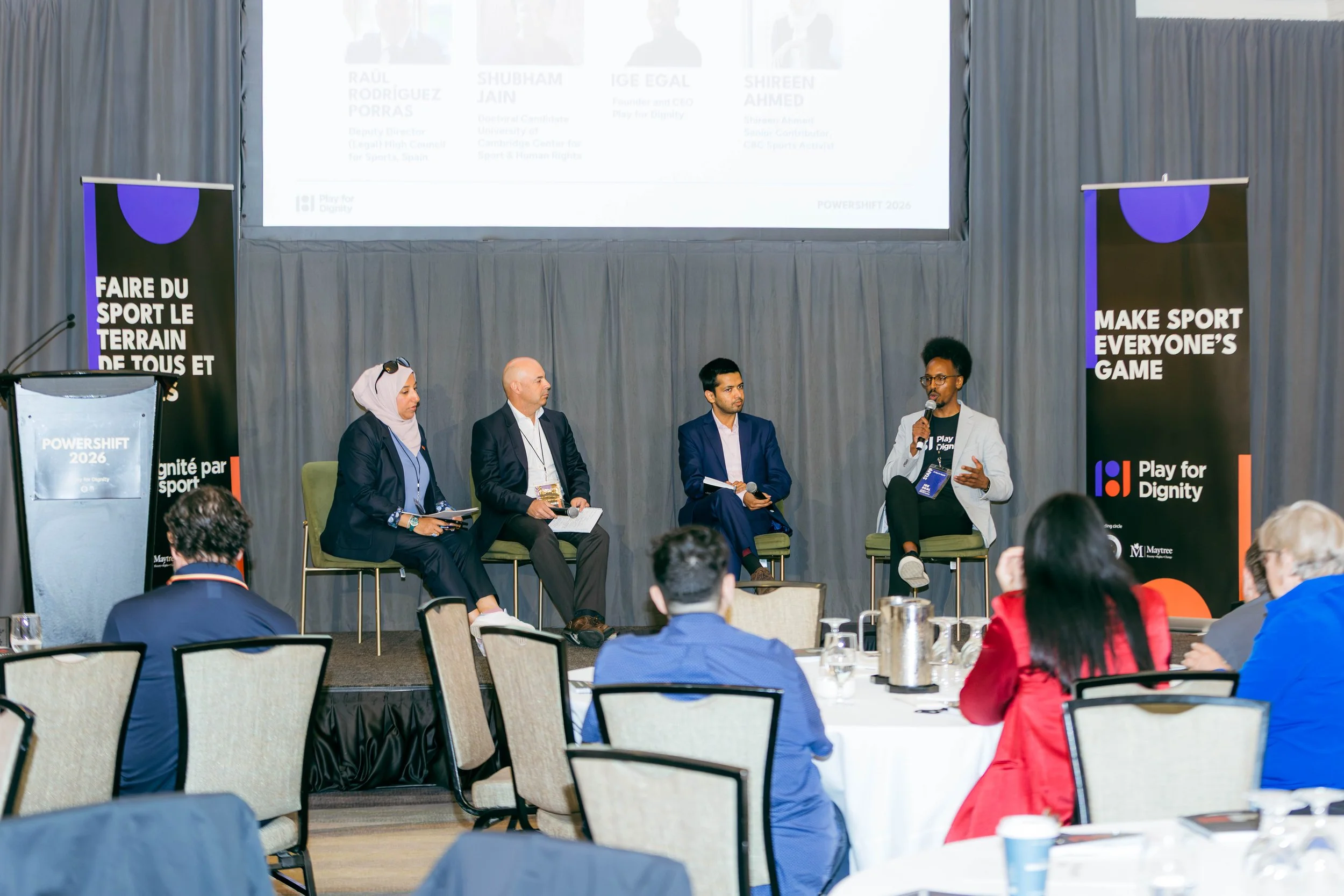
This panel turned the lens both inward and outward. Ige Egal grounded the session in a cornerstone recommendation of the Future of Sport in Canada Commission: the creation of a centralized sport entity. Raul Rodriguez-Porras brought the Spanish experience — a jurisdiction that built a centralized sport entity with an explicit rights mandate — offering a real-world model for structural change in Canada. Shubham Jain rounded out the conversation with broader implementation lessons for rights-based approaches from across the world. Speakers: Ige Egal, Raul Rodriguez-Porras, Shubham Jain.
Let Us Play
Fireside Chat
Let Us Play
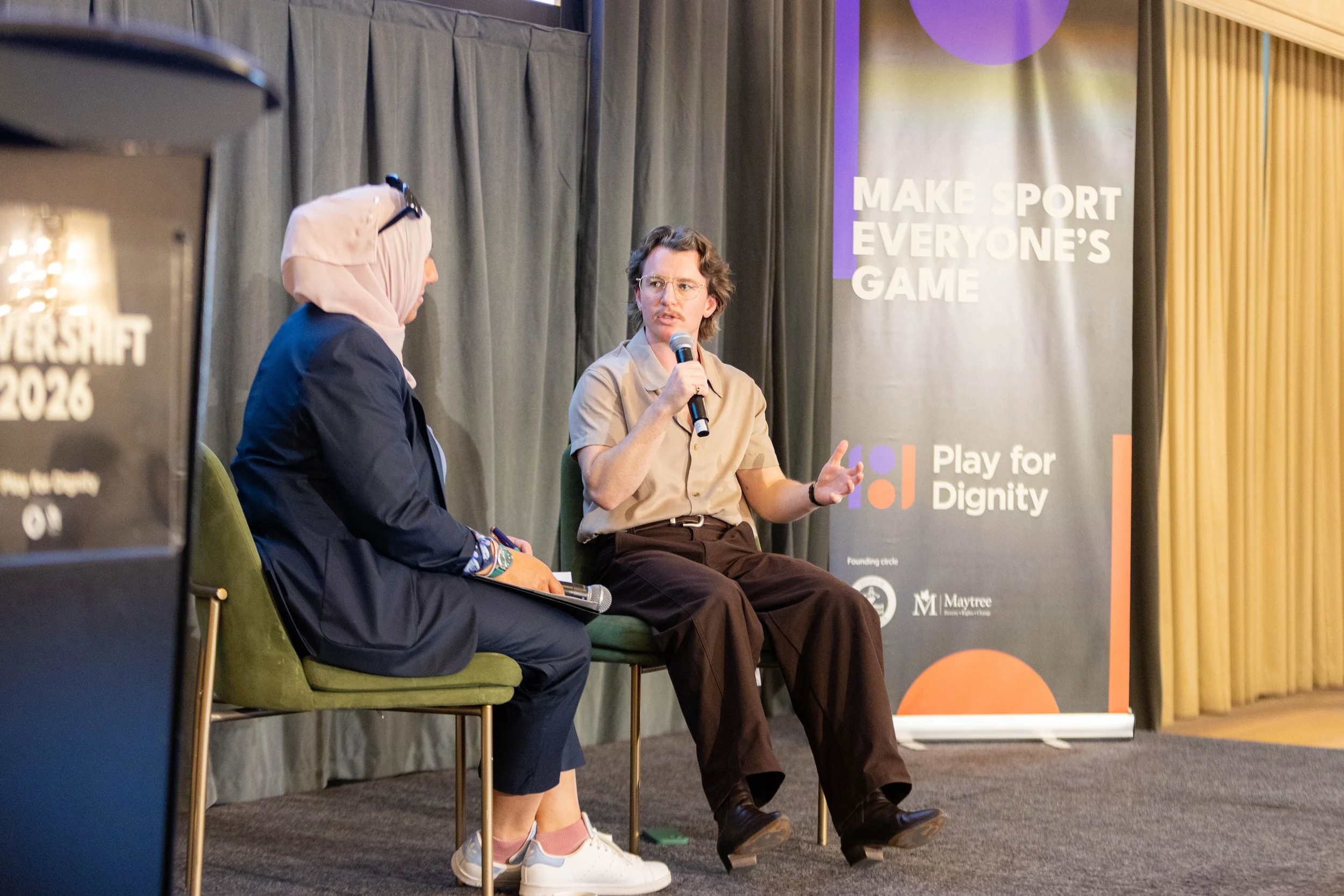
Harrison Browne made history as the first openly transgender professional athlete in North American team sports — and then kept going. Now an actor, filmmaker, and advocate whose profile has never been higher, Browne joined us for a fireside conversation about Let Us Play: Winning the Battle for Gender Diverse Athletes, his path from the ice to the screen (Heated Rivalry, Pink Light), and what storytelling does that policy alone cannot to make sport better for everyone. Speaker: Harrison Browne.
Who Is Sport For?
Plenary 3
Who Is Sport For?
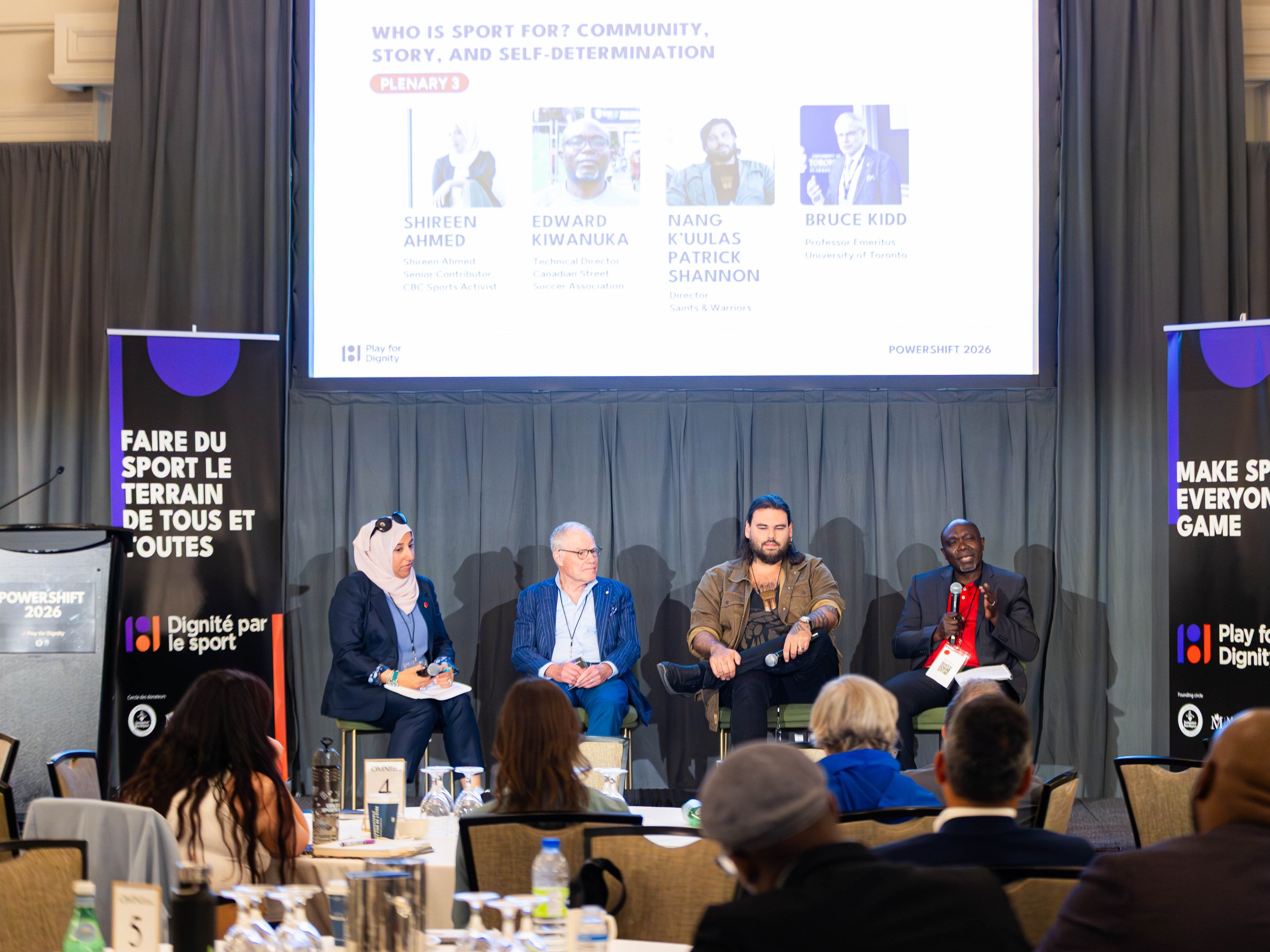
Rights in sport are not only realized through policy reform — they are claimed from the ground up by communities who create their own sporting cultures when mainstream systems are not fit for purpose. Bruce Kidd offered table-setting remarks drawing on his landmark scholarship on sport as a contested terrain of power, ideology, and national identity in Canada. A conversational, story-led session then explored how communities assert their right to sport, tell their own stories, and shift notions of "who is sport for," featuring an excerpt from the Saints & Warriors documentary, with an optional full evening screening. Speakers: Bruce Kidd, Nang Ḵ'uulas Patrick Shannon, Shireen Ahmed, Edward Kiwanuka-Quinlan.
Making Change in Sport & Rec
Plenary 4
Making Change in Sport & Rec
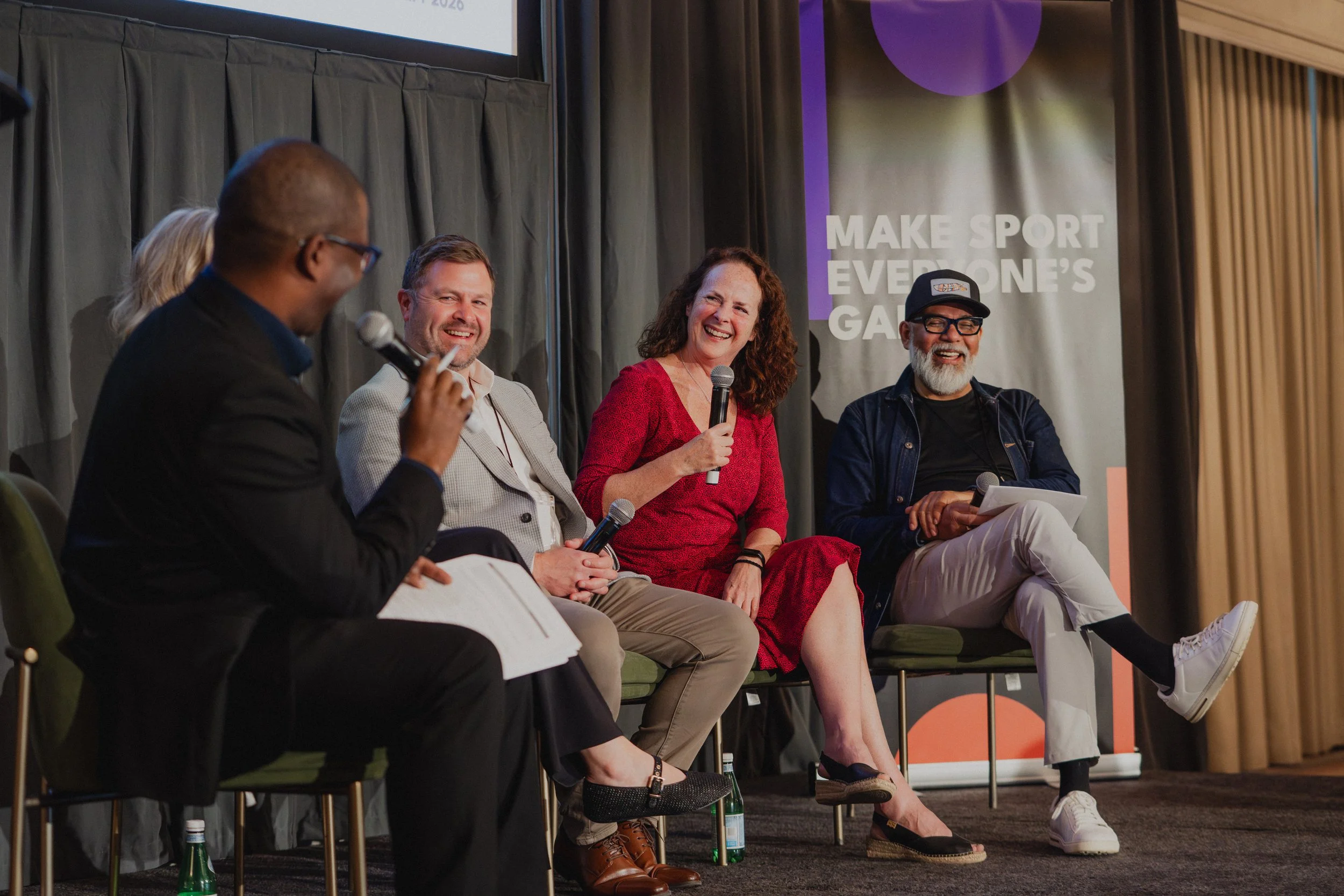
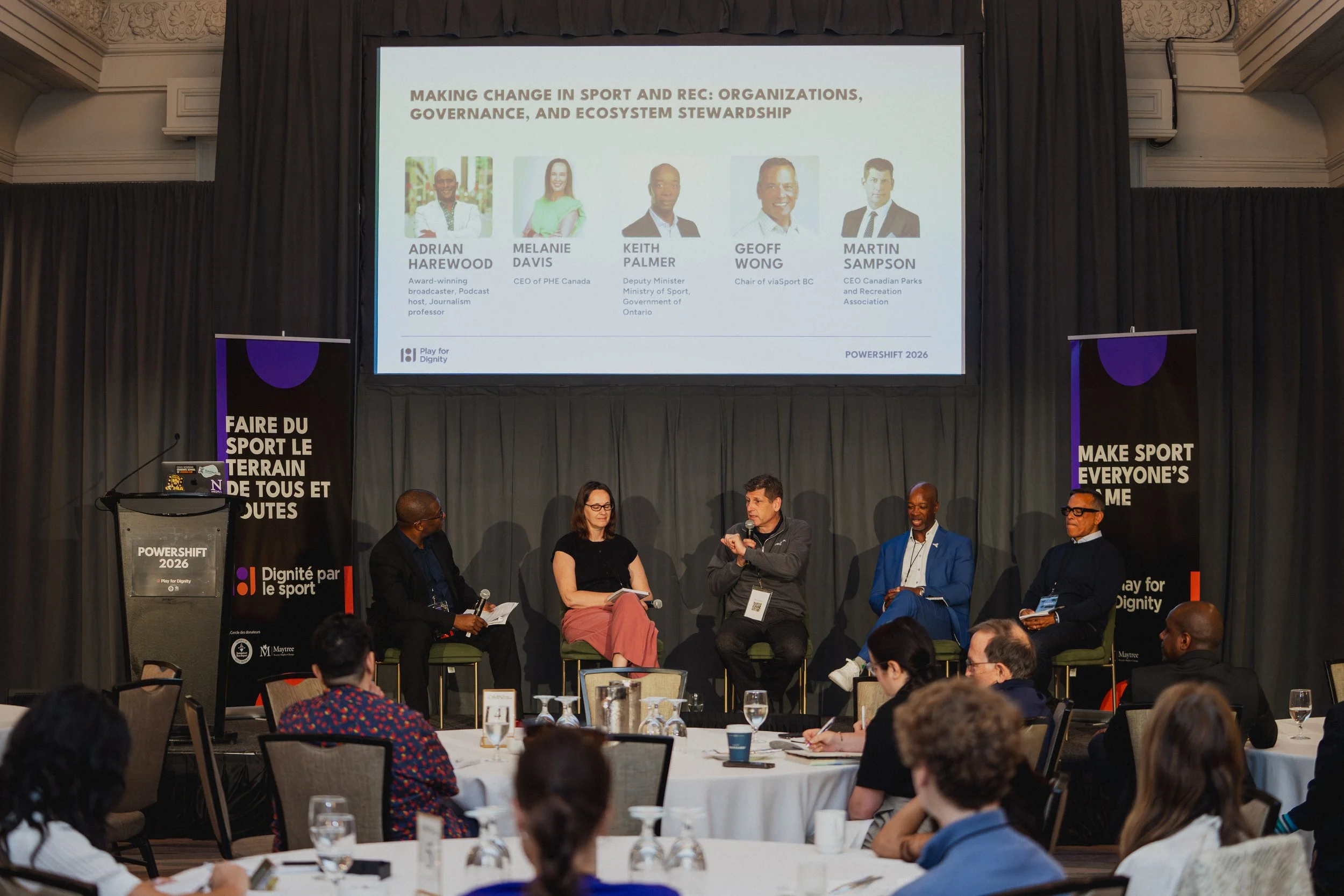
Canada's sport governance structures have faced significant pressure to deliver on dignity, safety, equity, and accountability. A rights-based approach offers a different organizing principle — one that clarifies who holds rights, who bears duties, and how accountability travels through an organization. This panel brought together leaders from across the sport and recreation ecosystem who are navigating that shift from within their organizations and the ecosystems they help steward, sharing what they've learned about the friction, the traction, and the conditions that make change possible. Speakers: Adrian Harewood, Melanie Davis, Martin Sampson, Keith Palmer, Geoffrey Wong.
From Promises to Practice
Breakout A
From Promises to Practice
As the FIFA Men's World Cup 2026 approaches, host cities across Canada, Mexico, and the United States face growing pressure to ensure mega-events uphold rather than undermine human rights. This session brought together leaders from the Centre for Sport and Human Rights — specifically Generation 2026 — to examine how commitments around safeguarding, inclusion, youth participation, and accountability are being translated into practice. Drawing on work across all three host countries, panelists explored the challenges of implementing rights frameworks in real-world contexts and highlighted emerging safeguarding tools and youth-centered research, asking: can mega-events truly leave rights-respecting legacies, and what must change if they are to? Speakers: Sabrina Razack, Katie Hanna, Laura Sánchez Martínez, Tonatiuh Magos.
Shifting the Power
Breakout B
Shifting the Power
Mega-events like the FIFA World Cup are a fixture of modern sport. While we may not be able to change the institutions governing global sport, collective power can change how these events are organized on the ground. This session examined FIFA's 2017 Human Rights Framework and its practical application by 2026 host cities Vancouver and Toronto, deconstructing the essential components of a human rights risk assessment: identifying vulnerable populations, assigning responsibility for protection, and establishing mitigation processes. A facilitated discussion led by David Roberts explored moving beyond a "check-box" approach toward more liveable, just, and sustainable host cities. Facilitator: David Roberts.
Who Controls the Resources?
Plenary 5
Who Controls the Resources?
Funding is where institutional power is most legible. Philanthropic and public investment in sport shapes who gets to participate, what gets built, and whose vision of the game gets resourced — yet much of it operates without explicit accountability to rights-holders. A rights-based approach asks different questions: who holds rights, who bears obligations, and how does accountability travel through the funding system over time? This panel explored how systems-oriented funders are beginning to ask those questions, and what it would take for the broader ecosystem to follow. Speakers: Renata Simril (by video link), Stuart McReynolds, Elizabeth McIsaac, Bruce W.J. Miller, Samantha Rogers.
How We Lead From Here
Plenary 6 · Closing
How We Lead From Here
To reimagine sport is to reimagine leadership at all levels of sport and play. As "rapporteur" present throughout the summit, Waneek shared her closing signature address and moved into a reflection with moderator Adrian Harewood on what the summit had surfaced about human rights as a common denominator for change-making across different sports, communities, and organizations — answering the biggest question of all: how do we all lead from here? Speakers: Waneek Horn-Miller, Adrian Harewood.
3 WORKSHOPS

Three shifts, three tracks

Every participant moved through all three facilitated tracks together, a shared journey through practice, policy, and perception.
Practice track
PRACTICE

Shifting power to communities

Grassroots innovation and human-rights-based approaches — how coaches, organizers, and nonprofits embed dignity, inclusion, and belonging on the ground.
Policy track
POLICY

Rights, governance & investment

The structural levers — federal frameworks, funding models, governance reform, and the momentum behind a Canadian Bill of Rights for Sport and Play.
Perception track
PERCEPTION

Storytelling & representation

Storytellers, journalists, and movement mavericks whose voices reimagine the narrative of sport — reinforcing belonging, joy, and social change.

Want the full picture?

Explore the complete summit program — every session, keynote, and track.

See the full program →
With thanks to

Summit Partners & Sponsors

PowerShift 2026 was made possible by the generous support of these partners.

Lead Partners
Supporting Partners
In-Kind Sponsors
TESTIMONIALS

WHAT ATTENDEES SAID

“

This event is terrific. I get it now. I didn't fully understand it before. I'm so glad I'm here — this feels very anti establishment in the best way. It is very punk rock. Congratulations!

— Former Professional Sport Executive
“

It was such a meaningful experience, and I left feeling inspired by the conversations, perspectives, and connections I had the opportunity to engage with throughout the conference. I've signed up for the Play for Dignity newsletter, and I'm excited to stay up to date with the organization's work and future initiatives.

— Speaker and Recreation Sector Professional
“

I am in awe of you and your team and every detail you all thought of. This was one of the most inclusive and action-oriented conferences I've been at in a long time.

— Director, Sports Organization
“

The most important thing that I walked away with was that I finally had words to put to feelings and ideas that I've been feeling for a long time about Indigenous sport and sport in general. That, my friend, is the greatest gift you could've ever given me.

— Indigenous Sport Leader
With gratitude

Thank You to Our Advisors

For their guidance, insight, and vision in shaping PowerShift 2026. This summit would not have been possible without their leadership.